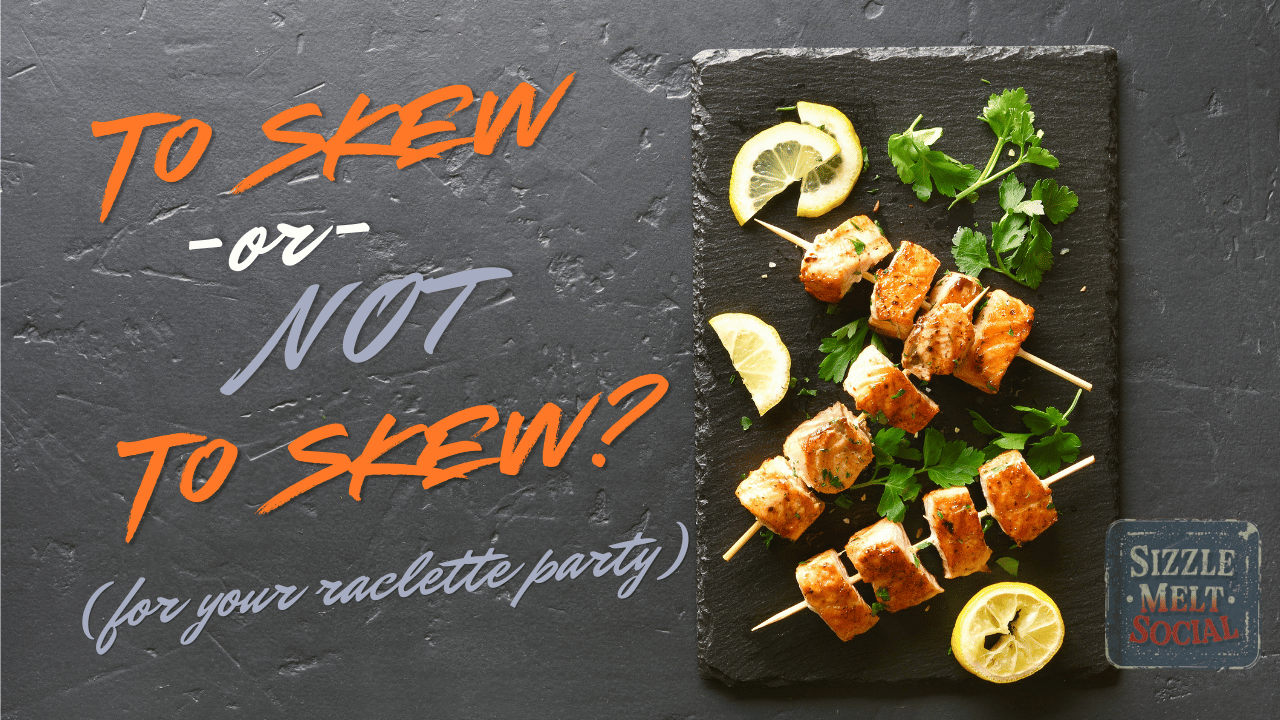
Look, we’ve all been there. You’ve got your raclette grill set up, the wine is flowing, the cheese is melting, and suddenly you think: “What if I put meat on sticks and cook it over this thing like it’s a tiny campfire?”
It’s a tempting thought. The grill is right there. The heat is right there. Skewers exist. Why not?
Well, I’m here to tell you why not. Because sometimes the answer to “Can I?” is technically yes, but the answer to “Should I?” is a firm, cheese-covered no.
Just Because You Can Doesn’t Mean You Should
Human ingenuity is a beautiful thing. It’s what gave us the wheel, the printing press, and the ability to put a camera on a phone. But that same ingenuity, when applied to raclette grills, sometimes gives us… skewers.
You can balance skewers across a raclette grill. The heat source is there. The sticks fit. Physics does not object. But much like you can eat cereal with a fork or wear socks with sandals, the fact that it’s possible doesn’t make it a good life choice.
Why the Answer Is No
Here’s the thing: raclette isn’t just a cooking method. It’s a philosophy.
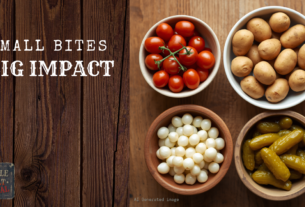
The entire design of raclette-style eating is built around slow cooking, one bite at a time. You melt a little cheese. You prep a little gherkin. You assemble a small, perfect bite on your plate. You eat it. You repeat. It’s meditative. It’s social. It’s the anti-fast-food.
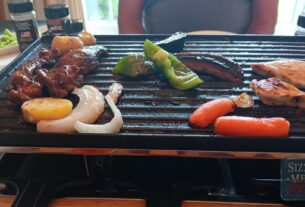
When you start jamming skewers onto the grill, you’re trying to turn it into something it’s not—an outdoor barbecue. You’re rushing. You’re trying to cook whole shish kebabs worth of food at once. And in doing so, you’re missing the entire point of the experience.
Raclette is designed for each bite to be crafted, not mass-produced. The small pans exist so you can give individual attention to individual portions. Skewers bypass that whole system, turning a thoughtful, communal eating experience into “how fast can we char the chicken?”
Why Avoid Using Skewers on Your Rackette Grill Top?
Because…I’ve seen what happens to those who choose the skew it route, as documented in this video where someone gave it a go:
The mistakes are predictable: cooking too much at once on the skewers. You get uneven cooking. Some pieces are burnt in the middle. Some are raw on the outside. The grill doesn’t have the heat distribution for proper skewer work, and you end up babysitting sticks of meat when you should be relaxing with your beverage, planning spices to use for your next bite and a watching the onion and cherry tomatoes you placed on the slice of Gruyère merge together in your coupelle (pan).
The silver lining? The cheese was still a hit.
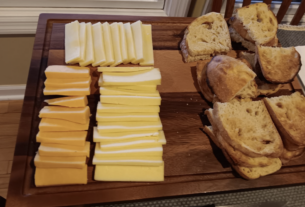
Of course it was! The cheese is always a hit. The cheese is the reason everyone showed up. The cheese doesn’t need skewers. The cheese doesn’t need innovation. The cheese just needs a pan, some heat, and a potato waiting underneath.
Thanks to Michelle for sharing her raclette experience on YouTube!
I have the same double-tiered pan shelf Cusimax unit she has, and I love it: featured here on Amazon.
The Verdict: Raclette is not just grilling done indoors.
So, toss the sticks but keep the tongs and scrapers!
Leave the skewers for the barbecue. Let the raclette be what it was designed to be: a slow, deliberate, cheese-forward eating experience where each bite gets the attention it deserves. This is not a race to the finish of cooking all your meat and veggies in one go.
If you want to cook meat, use the top of the raclette grill for grilling small pieces directly—or better yet, just prep some cured meats and charcuterie as accompaniments. Save the skewers for summer outdoor grilling festivites.
Side note:
If you’re shopping for a raclette grill and notice the stock photos or video of the grill includes a demonstration with meat and veggie skewers on the grill top, you can absolutely interpret from this that the people who do marketing for that grill have no idea about what their own company’s product was actually designed to do in terms of small bites, slow eating and interactive meals. They mistakenly think it’s just like outdooe grilling but indoors.
Someone should tell them. They need to know so they, too, can enjoy what you and I love about this style of community eating. I can only hope they read this blog post.
Do you know someone who would only think to put skewers on their raclette tabletop grill because they haven’t been properly introduced to the philosophy of the meal style? If so, please share this post with them (and plan to introduce them to raclette done the way it was intended to be).