
What is raclette?
The term “raclette” has four distinct meanings:
1. The Cheese
A semi-soft Alpine cheese known for its smooth-melting nature. When heated, the taste changes from a barnyard-esque profile to a creamy, gooey texture with a pleasant rich, nutty accent similar to brie.Just as Italy safeguards prosciutto and France protects champagne, Raclette du Valais holds a Protected Designation of Origin (PDO) on this cheese, though only a small percentage of raclette cheese worldwide comes from this region. This cheese can only be considered official “raclette” cheese if produced in the French-speaking Swiss canton of Valais.
2. The Tabletop Grill
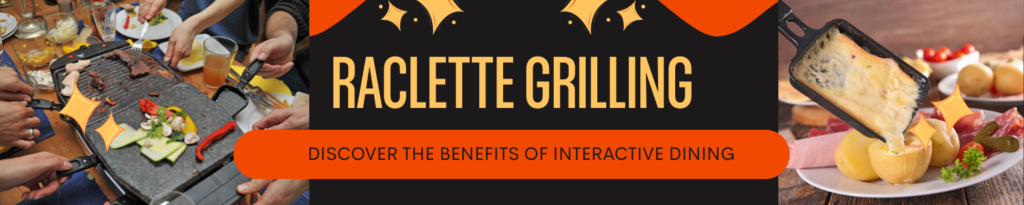
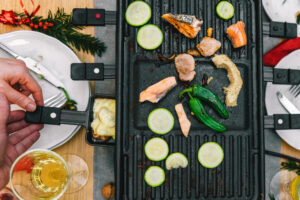
An electric appliance (a.k.a. raclette grill, raclette table grill, raclette machine) that features a top surface for grilling meats and vegetables, with small individual broiler pans underneath that melt cheese. It allows for the unique experience of cooking directly at the table during the meal.
3. The Traditional Wheel
A specialized appliance—often seen in Alpine restaurants and street markets—that heats a halved wheel of cheese from the cut edge. Once melted, the cheese is scraped directly onto plates, sandwiches, or potatoes. This is the original Swiss method.
4. The Experience
A social dining event where guests gather around a tabletop grill to cook their own meats, vegetables, and melted cheese at a leisurely pace. More than a meal, it’s an interactive experience that encourages conversation, connection, and the art of slow eating.
The word raclette evolved from the French word racler, which means “to scrape” – referring to the famed scraping action used to pouring the hot, melted cheese over meats and vegetables during this type of meal.
Do I have to use raclette cheese with a raclette grill?
Fortunately, you can use any cheese that is good for melting and spreading over food. Common substitutes for raclette cheese include Gruyère, Emmental, Fontina, Appenzeller, and Jarlsberg, as these cheeses offer excellent melting properties and rich flavors that work well in a raclette-style setup.
You can also use Mild or Sharp Cheddar and standard Swiss Cheese, but be sure to avoid Extra Sharp or “Seriously Sharp” Cheddars as these are lower in moisture, making them a challenge to melt.
What kind of raclette grill should I buy?
Several key factors should guide your decision when selecting the perfect raclette grill with a cheese melting pan feature. Consider the following:
- Capacity: How many people do you plan to host? Ensure the grill accommodates your typical gathering size.
- Versatility: Do you want to limit the appliance to dinner only, or do you plan to cook breakfast and lunch? Would you like the flexibility to use it for Korean BBQ?
- Table Shape: Will you be using a square/rectangular or a round table? The grill shape should complement your dining setup.
- Material & Aesthetic: Do you prefer a stone top, cast iron, or aluminum? Consider the base as well: metal or wood?
- Maintenance: Is ease of cleaning a priority? Look for models with dishwasher-safe grill tops or non-stick coatings.
- Budget & Durability: Do you have any budget limitations? Keep in mind that higher-priced models often offer better longevity.
Once you have defined your specific needs, consult trusted reviews (like the ones found on this site) to help you narrow down the options and find the ideal grill for your home.
What does a traditional raclette dinner include?
A traditional Swiss raclette meal centers on melted raclette cheese scraped onto plates of boiled potatoes and cured meats. To balance the richness, the cheese is typically served with pickled garnishes like cornichons and pearl onions.
Key features of an authentic Alpine dinner include:
- Cheese: Raclette cheese (or substitutes like Emmental, Gruyère, or Tilsit) heated until soft, smooth and bubbly.
- Potatoes: Small, new potatoes, such as Dutch reds or baby potatoes, boiled with their skins on.
- Meats: A selection of dry-cured charcuterie, such as prosciutto, salami, or ham.
- Accompaniments: Cornichons, pickled onions, cherry tomotoes, bread (baguettes), and a basic green salad tossed in a classic vinaigrette dressing.
Modern variations often include grilling vegetables like mushrooms, zucchini, and peppers, or sausages on a tabletop grill alongside the cheese. Beverages traditionally paired with the meal include crisp white wine (Fendant or other Savoy whites), or black tea to aid digestion.
You do not have to limit yourself to this traditional raclette menu, however, when hosting a raclette meal. There are so many more options to explore, hence the reason I decided to blog about how versatile this kind of slow eating can be, theme-wise. There are options to suit every taste using a raclette grill!
What size raclette grill should I buy?
Great question! Don’t rely solely on the “person count” listed in raclette grill specs, which usually refers to the number of melting pans included in the grill kit. For a comfortable family-style meal, it is best to size down. A good rule of thumb is to subtract two from the pan count: buy an 8-person grill for a party of six, a 6-person grill for four people, and a 3-4 pan grill for 2-3 guests.
You can stick to the advertised capacity, but be prepared for tighter conditions. Expect to negotiate “grill real estate” and have less proximity to the cooking surface while you eat.
For larger gatherings of eight or more, consider purchasing two grills to ensure everyone at the table has easy access to the cooking action.
When do people typically host raclette dinners? Year round? Special occasions?
In Switzerland and France, raclette is traditionally considered a winter custom, peaking from October to December when the best local cheese reaches its 4-5 month maturation. It is a staple for special family gatherings, particularly around Christmas Eve and New Year’s Eve, serving as an annual tradition for many households.
Fortunately, raclette-style comfort food can be enjoyed year-round, regardless of the season or weather. While purists in the Alpine canton of Valais enjoy it throughout the summer, enthusiasts elsewhere can host a raclette meal for any occasion: from anniversaries and birthdays to entertaining out-of-town guests or simply a weekly date night.
As long as you have electricity and access to a cheese ideal for melting, you can decide to make raclette a recurring routine practice or an indulgence you reserve only for special occasions.
How did raclette-style eating get started? What’s the history beind it?
The concept is said to have originated in Switzerland and France when Alpine shepherds, who used to hang out in the mountains with a giant half-wheel of cheese, were known to prop the cheese up near a fire and scrape the melted layer onto their bread or potatoes. Records suggest that melting raclette-style cheese in front of a fire in Valais dates back to 1574.
Why have I never heard of this until now?
This question usually comes from fellow U.S. residents. If you asked this, the answer is likely that it just hasn’t (yet) reached the same level of popularity outside of counties like Switzerland, France, Austria and Germany.
I was well into my late 30s when I first discovered raclette dining the benefits of the slow-cook and eat pace. Since then, I’ve introduced it to others, and their reaction is always the same: a mix of delight and disbelief that this experience has remained a secret to them for so long. It’s a shame we’ve been stuck in a cultural bubble that limits group fun with melted cheese to fondue-pot dipping search and rescue missions, upscale mac and cheese recipes, and dipping tortilla chips into a crockpot of spicy queso warmed by a tea light.
But the real question is: now that you know the secret, who are you going to introduce it to?
If you were already in-the-know, I’d love to learn how you were introduced to it. Feel free to shoot me an email message through the contact form, if you’re open to sharing your story